" height="17.646099999999997px" id="QslXmfAfI" transform="translate(49.168 11.85)" width="14.255000000000003px"/><path d="M 7.17 3.374 C 5.292 3.374 3.927 4.412 3.84 4.585 L 3.84 13.927 C 4.011 14.099 5.122 14.792 6.743 14.792 C 9.559 14.792 11.523 12.629 11.523 8.91 C 11.523 5.191 9.56 3.374 7.17 3.374 Z M 7.255 17.819 C 5.292 17.819 3.927 17.127 3.756 16.954 L 3.756 24.739 L 0 24.739 L 0 0.519 L 3.328 0.519 L 3.328 1.644 C 3.499 1.471 5.122 0 7.852 0 C 12.291 0 15.279 3.548 15.279 8.563 C 15.364 14.186 11.693 17.817 7.254 17.817" fill="rgb(255, 255, 255)" height="24.7392px" id="Jv0Bp2r5m" transform="translate(66.412 11.677)" width="15.280263915789673px"/><path d="M 0.341 7.265 L 4.097 7.265 L 4.097 24.046 L 0.341 24.046 Z M 2.219 4.411 C 1.024 4.411 0 3.46 0 2.248 C 0 1.036 1.024 0 2.219 0 C 3.414 0 4.353 1.037 4.353 2.248 C 4.353 3.459 3.415 4.411 2.219 4.411 Z" fill="rgb(255, 255, 255)" height="24.045689786529543px" id="rHOnirvNp" transform="translate(85.019 5.105)" width="4.352800000000002px"/><path d="M 7.683 11.463 C 7.598 11.29 7.511 11.203 7.426 11.03 C 7.341 10.943 7.341 10.857 7.255 10.684 C 5.548 7.743 3.67 5.235 2.048 3.592 C 1.623 3.158 1.195 3.158 0.769 3.158 C 0.512 2.898 0.257 2.639 0 2.379 C 0 0.908 0.683 0.13 1.11 0.043 C 1.623 -0.128 2.22 0.216 2.902 0.995 C 4.609 2.812 6.401 6.704 7.683 11.461" fill="rgb(255, 255, 255)" height="11.462948338486765px" id="tChElFj4n" transform="translate(14.254 0.474)" width="7.682599999999999px"/><path d="M 9.856 9.461 C 9.771 9.375 9.685 9.287 9.514 9.115 C 9.428 9.029 9.343 8.942 9.258 8.856 C 6.867 6.432 4.393 4.531 2.429 3.32 C 1.916 2.973 1.489 3.147 1.063 3.233 C 0.722 3.06 0.466 2.887 0.125 2.713 C -0.218 1.243 0.209 0.379 0.636 0.118 C 1.148 -0.14 1.832 0.033 2.599 0.552 C 4.648 1.936 7.379 5.223 9.855 9.461" fill="rgb(255, 255, 255)" height="9.460630695019557px" id="vloudrALc" transform="translate(9.775 2.303)" width="9.855710115060003px"/><path d="M 11.6 6.909 C 11.515 6.823 11.343 6.736 11.174 6.649 C 11.087 6.563 10.918 6.563 10.832 6.476 C 7.929 4.833 5.027 3.536 2.808 2.93 C 2.211 2.758 1.869 3.017 1.526 3.19 C 1.185 3.104 0.844 3.017 0.503 2.93 C -0.266 1.634 -0.01 0.681 0.331 0.335 C 0.759 -0.096 1.442 -0.096 2.38 0.25 C 4.6 1.027 8.101 3.449 11.6 6.909 Z" fill="rgb(255, 255, 255)" height="6.909181958759132px" id="Jjs0AiJtx" transform="translate(5.812 5.287)" width="11.59970127692726px"/><path d="M 12.602 4 C 12.431 3.915 12.345 3.915 12.174 3.915 C 12.089 3.915 11.92 3.827 11.833 3.827 C 8.59 2.961 5.516 2.53 3.212 2.53 C 2.529 2.53 2.274 2.875 2.017 3.134 L 0.993 3.134 C -0.117 2.009 -0.117 1.059 0.139 0.626 C 0.396 0.107 1.077 -0.065 2.103 0.021 C 4.323 0.107 8.334 1.579 12.602 4 Z" fill="rgb(255, 255, 255)" height="4.000438971629659px" id="sM4pEUyNl" transform="translate(2.762 9.234)" width="12.602083166916639px"/><path d="M 12.82 1.309 L 12.051 1.309 C 8.723 1.309 5.65 1.743 3.43 2.348 C 2.833 2.52 2.661 2.866 2.49 3.299 C 2.149 3.384 1.808 3.472 1.466 3.558 C 0.185 2.779 -0.071 1.914 0.015 1.395 C 0.185 0.876 0.782 0.445 1.722 0.271 C 3.855 -0.334 8.038 0.1 12.819 1.309" fill="rgb(255, 255, 255)" height="3.557663868293785px" id="WFA1ZSpfu" transform="translate(0.836 13.482)" width="12.820262677582846px"/><path d="M 12.377 0 C 12.206 0 12.12 0.086 11.951 0.086 C 11.864 0.086 11.695 0.173 11.609 0.173 C 8.365 1.124 5.549 2.249 3.5 3.373 C 2.988 3.719 2.903 4.15 2.817 4.498 C 2.475 4.67 2.22 4.844 1.963 5.017 C 0.512 4.584 0 3.806 0 3.287 C 0 2.767 0.512 2.249 1.366 1.73 C 3.244 0.779 7.512 0.086 12.378 0" fill="rgb(255, 255, 255)" height="5.017299999999999px" id="WIqTxAC_K" transform="translate(0 16.695)" width="12.3776px"/><path d="M 11.312 0 C 11.141 0.086 11.055 0.173 10.884 0.26 C 10.798 0.346 10.714 0.346 10.543 0.433 C 7.641 2.163 5.164 4.065 3.544 5.709 C 3.116 6.141 3.116 6.66 3.116 7.006 C 2.859 7.265 2.603 7.525 2.433 7.785 C 0.896 7.785 0.214 7.18 0.043 6.66 C -0.127 6.141 0.214 5.449 0.983 4.844 C 2.775 3.114 6.616 1.298 11.311 0" fill="rgb(255, 255, 255)" height="7.784800000000001px" id="MK0nqktck" transform="translate(0.297 18.944)" width="11.311724843428175px"/><path d="M 9.252 0 C 9.168 0.086 9.081 0.173 8.911 0.346 C 8.825 0.432 8.74 0.519 8.654 0.606 C 6.264 3.028 4.386 5.536 3.191 7.526 C 2.849 8.13 3.02 8.564 3.191 8.91 C 3.02 9.255 2.849 9.515 2.679 9.775 C 1.227 10.208 0.375 9.775 0.118 9.343 C -0.138 8.824 0.032 8.131 0.544 7.354 C 1.825 5.365 5.068 2.597 9.251 0.002" fill="rgb(255, 255, 255)" height="9.954311867869848px" id="JsfR8EvL2" transform="translate(2.186 21.192)" width="9.252355542257117px"/><path d="M 6.819 0 C 6.734 0.086 6.647 0.26 6.562 0.433 C 6.477 0.519 6.477 0.692 6.391 0.779 C 4.77 3.72 3.489 6.66 2.892 8.909 C 2.722 9.514 2.976 9.86 3.148 10.207 C 3.063 10.553 2.977 10.899 2.892 11.245 C 1.612 11.937 0.672 11.764 0.331 11.418 C -0.095 10.985 -0.095 10.294 0.246 9.342 C 1.013 7.006 3.404 3.546 6.819 0 Z" fill="rgb(255, 255, 255)" height="11.720625000000002px" id="m4pphcds0" transform="translate(5.045 23.527)" width="6.818575406303453px"/><path d="M 3.863 0 C 3.778 0.173 3.778 0.26 3.778 0.431 C 3.692 0.519 3.692 0.691 3.692 0.778 C 2.838 4.065 2.411 7.179 2.411 9.514 C 2.411 10.206 2.753 10.464 3.094 10.724 L 3.094 11.763 C 1.984 12.801 1.045 12.887 0.619 12.628 C 0.107 12.369 -0.064 11.677 0.021 10.639 C 0.021 8.39 1.473 4.325 3.863 0 Z" fill="rgb(255, 255, 255)" height="12.751489535946135px" id="cpEqjkGDz" transform="translate(9.025 25.603)" width="3.8629048371474006px"/><path d="M 3.473 11.589 C 2.704 12.888 1.85 13.234 1.339 13.06 C 0.828 12.888 0.401 12.281 0.231 11.33 C -0.282 8.995 0.06 4.756 1.254 0 L 1.254 0.777 C 1.254 4.151 1.682 7.266 2.279 9.515 C 2.449 10.12 2.876 10.292 3.217 10.551 C 3.217 10.899 3.303 11.245 3.474 11.59" fill="rgb(255, 255, 255)" height="13.10186100081782px" id="uppDfucj7" transform="translate(13.172 27.421)" width="3.474019629105161px"/><path d="M 5.122 10.64 C 4.694 12.11 3.927 12.629 3.414 12.629 C 2.902 12.629 2.304 12.11 1.878 11.245 C 0.768 9.169 0.085 4.931 0 0 C 0 0.172 0.085 0.259 0.085 0.432 C 0.085 0.519 0.171 0.692 0.171 0.778 C 1.109 4.065 2.22 6.919 3.329 8.995 C 3.67 9.514 4.096 9.6 4.439 9.687 C 4.78 10.033 4.951 10.379 5.122 10.638" fill="rgb(255, 255, 255)" height="12.628800000000002px" id="vo5UG0vdZ" transform="translate(16.303 28.716)" width="5.121799999999997px"/><path d="M 7.596 8.995 C 7.596 10.551 6.914 11.244 6.487 11.329 C 5.975 11.503 5.377 11.158 4.695 10.379 C 3.072 8.649 1.28 4.755 0 0 C 0.085 0.172 0.171 0.259 0.256 0.431 C 0.341 0.517 0.341 0.692 0.427 0.777 C 2.134 3.719 4.012 6.227 5.633 7.87 C 6.061 8.304 6.487 8.304 6.915 8.304 C 7.084 8.476 7.341 8.735 7.597 8.995" fill="rgb(255, 255, 255)" height="11.373210313461023px" id="CwMQ25e3M" transform="translate(18.523 29.41)" width="7.597100000000001px"/><path d="M 9.133 9.255 C 8.621 9.515 7.938 9.34 7.17 8.821 C 5.207 7.61 2.475 4.237 0 0 C 0.085 0.086 0.169 0.172 0.341 0.346 C 0.426 0.432 0.512 0.519 0.598 0.605 C 2.988 3.026 5.463 4.93 7.427 6.14 C 7.939 6.486 8.365 6.314 8.793 6.226 C 9.134 6.4 9.39 6.573 9.731 6.745 C 9.988 8.13 9.561 8.994 9.134 9.254" fill="rgb(255, 255, 255)" height="9.373902685657523px" id="LT4eU69fV" transform="translate(20.828 29.583)" width="9.808773264265323px"/><path d="M 11.268 6.488 C 10.84 6.922 10.159 6.922 9.22 6.574 C 7 5.883 3.501 3.374 0 0 C 0.085 0.088 0.257 0.173 0.428 0.26 C 0.512 0.348 0.683 0.348 0.769 0.433 C 3.671 2.078 6.573 3.374 8.792 3.979 C 9.389 4.152 9.732 3.892 10.073 3.719 C 10.415 3.807 10.756 3.892 11.097 3.979 C 11.782 5.19 11.609 6.142 11.268 6.487" fill="rgb(255, 255, 255)" height="6.824935237585997px" id="shxgCPSUC" transform="translate(23.047 29.149)" width="11.567287574027546px"/><path d="M 12.548 3.374 C 12.291 3.893 11.609 4.066 10.585 3.979 C 8.281 3.893 4.268 2.422 0 0 C 0.17 0.087 0.257 0.087 0.426 0.087 C 0.511 0.173 0.682 0.173 0.767 0.173 C 4.011 1.038 7.085 1.47 9.389 1.47 C 9.986 1.47 10.327 1.124 10.584 0.865 L 11.609 0.865 C 12.718 2.076 12.803 2.941 12.547 3.374" fill="rgb(255, 255, 255)" height="4.000464435441412px" id="uu7Nczyji" transform="translate(25.096 28.025)" width="12.667149073078093px"/><path d="M 12.975 2.249 C 12.804 2.768 12.206 3.2 11.268 3.373 C 8.964 3.892 4.78 3.546 0 2.335 L 0.768 2.335 C 4.098 2.335 7.169 1.903 9.389 1.297 C 9.986 1.124 10.158 0.778 10.414 0.345 C 10.755 0.259 11.096 0.173 11.438 0 C 12.803 0.951 13.146 1.816 12.975 2.249" fill="rgb(255, 255, 255)" height="3.606840004247573px" id="CyUPdgCMb" transform="translate(26.803 24.219)" width="13.015267805496734px"/><path d="M 12.463 1.729 C 12.463 2.334 11.951 2.853 11.097 3.286 C 9.049 4.411 4.866 5.189 0 5.189 C 0.171 5.189 0.256 5.103 0.426 5.103 C 0.512 5.103 0.683 5.015 0.768 5.015 C 4.011 4.065 6.828 2.94 8.877 1.816 C 9.56 1.384 9.474 0.865 9.646 0.346 C 9.817 0.259 9.987 0.173 10.158 0 C 11.865 0.346 12.462 1.211 12.462 1.73" fill="rgb(255, 255, 255)" height="5.188899999999997px" id="HfjkjT_ZU" transform="translate(28.168 19.463)" width="12.463100000000004px"/><path d="M 10.244 3.036 C 8.536 4.68 4.694 6.496 0 7.793 C 0.17 7.705 0.257 7.62 0.426 7.533 C 0.512 7.445 0.597 7.36 0.768 7.36 C 3.67 5.63 6.146 3.726 7.766 2.084 C 8.279 1.565 8.107 0.96 8.194 0.527 C 8.363 0.355 8.535 0.181 8.62 0.007 C 10.327 -0.079 11.096 0.614 11.181 1.131 C 11.352 1.736 11.011 2.344 10.242 3.035" fill="rgb(255, 255, 255)" height="7.793082706379288px" id="SXOvdlaRs" transform="translate(28.852 14.61)" width="11.224057094005001px"/><path d="M 8.707 2.721 C 7.512 4.71 4.183 7.478 0 9.986 C 0.087 9.899 0.171 9.814 0.341 9.64 C 0.428 9.554 0.512 9.468 0.598 9.38 C 2.989 6.959 4.866 4.451 6.062 2.461 C 6.403 1.941 6.231 1.51 6.146 1.076 C 6.318 0.731 6.488 0.472 6.659 0.126 C 8.109 -0.22 8.963 0.211 9.22 0.645 C 9.389 1.164 9.22 1.856 8.707 2.721 Z" fill="rgb(255, 255, 255)" height="9.986170943855772px" id="I3iesR8ly" transform="translate(29.021 10.081)" width="9.283076753082124px"/><path d="M 6.488 2.411 C 5.805 4.66 3.33 8.206 0 11.754 C 0.085 11.666 0.171 11.493 0.257 11.32 C 0.341 11.234 0.341 11.061 0.428 10.974 C 2.049 8.034 3.33 5.092 3.927 2.843 C 4.098 2.238 3.842 1.892 3.67 1.546 C 3.756 1.201 3.841 0.855 3.927 0.508 C 5.293 -0.269 6.146 -0.01 6.488 0.336 C 6.829 0.767 6.829 1.461 6.488 2.411 Z" fill="rgb(255, 255, 255)" height="11.753584393394782px" id="pbQLCdVwI" transform="translate(28.596 6.066)" width="6.743699999999997px"/><path d="M 3.927 2.027 C 3.842 4.362 2.391 8.427 0 12.752 C 0.085 12.58 0.085 12.494 0.085 12.321 C 0.171 12.235 0.171 12.061 0.171 11.975 C 1.025 8.687 1.451 5.573 1.451 3.238 C 1.451 2.633 1.109 2.287 0.854 2.027 L 0.854 0.988 C 1.964 -0.049 2.902 -0.136 3.33 0.124 C 3.756 0.297 4.012 0.988 3.927 2.027 Z" fill="rgb(255, 255, 255)" height="12.752261951058593px" id="oBvQcz5UO" transform="translate(27.57 2.991)" width="3.9432808199121254px"/><path d="M 2.134 12.645 L 2.134 12.299 C 2.134 8.925 1.706 5.811 1.196 3.561 C 1.025 2.957 0.599 2.784 0.256 2.524 C 0.171 2.179 0.086 1.831 0 1.486 C 0.769 0.188 1.622 -0.071 2.134 0.015 C 2.646 0.188 3.072 0.794 3.243 1.745 C 3.756 4.081 3.415 8.319 2.219 13.077 L 2.219 12.644 L 2.134 12.644 Z" fill="rgb(255, 255, 255)" height="13.077048589670875px" id="C7U1kXqYA" transform="translate(23.9 0.849)" width="3.4740394102442735px"/><path d="M 5.036 12.629 C 5.036 12.455 4.952 12.369 4.952 12.195 C 4.952 12.109 4.865 11.937 4.865 11.85 C 3.927 8.563 2.817 5.709 1.707 3.633 C 1.366 3.028 0.94 3.028 0.512 2.854 C 0.341 2.508 0.171 2.249 0 1.989 C 0.428 0.519 1.195 0 1.707 0 C 2.22 0 2.732 0.519 3.244 1.384 C 4.268 3.46 4.952 7.698 5.036 12.629 Z" fill="rgb(255, 255, 255)" height="12.6287px" id="cy9raRJnv" transform="translate(19.119 0)" width="5.036200000000001px"/></svg>)
What can Britain still make for itself?
Why the UK must define its critical chemical and materials capacity, as repeated supply-chain shocks expose the risks of relying on global markets.


The UK doesn’t need to rebuild the chemical industry it used to have. But it does need to define the minimum it cannot afford to lose and make deliberate decisions to establish it.
For thirty years it has been a question without much urgency. Globalisation made the answer feel beside the point: if a material or chemical could be bought more cheaply from somewhere else, it was, and the somewhere else was rarely a concern. That assumption is now coming apart. A canal blocked by accident, attacks on shipping lanes, a pandemic, war in Ukraine: the past five years have been a steady lesson in how quickly supply chains tighten. As these words are published, a strait carrying much of the world's oil and gas sits closed by conflict in the Gulf, a reminder of how exposed a country becomes once it has stopped manufacturing the things it relies on.
So, it is worth asking the question again and answering it precisely rather than emotionally. Where is the UK heading on its current course, and which parts of that course should it be willing to change?
Where we are
Let’s start with the present, because the picture is sharper than public debate suggests. The Chemical Industries Association reports that UK chemical output fell by around 40% between 2021 and 2024, that at least 25 chemical sites have closed in recent years, and that the steep fall in the sector's emissions over that period has been driven overwhelmingly by those closures rather than by efficiency, a pattern its chief executive, Steve Elliott, has called decarbonisation by deindustrialisation. This is not a marginal corner of the economy. The same body puts the sector's turnover at £65.5 billion and its gross value added (GVA) at £21.8 billion, on a par with aerospace, automotive and life sciences.
The decline shows up most starkly in the loss of the foundations. The country that built ICI no longer manufactures ammonia in any meaningful quantity: the Billingham complex that was once the UK's largest ammonia plant now imports it to keep producing fertiliser and nitric acid. The pattern repeats across the upstream base. Vivergo's bioethanol plant closed in 2025, with the UK's only other world-scale ethanol facility, Ensus, restarting in 2026 largely to safeguard the UK's carbon dioxide supply; INEOS consulted on closing its Seal Sands acrylonitrile plant; ExxonMobil's Mossmorran ethylene plant has shut. And in December 2025, the government stepped in with more than £120 million, as part of a £150 million joint investment with INEOS, to keep Grangemouth running, describing it as Britain's last ethylene plant.
These are not the signs of a healthy, self-sufficient industry. They point to a base that has grown thin and brittle, dependent on a handful of ageing assets and on supply chains that begin overseas. The sector has swung from a trade surplus in the late 1990s into a deficit now running at around £10 billion a year, depending on which trade series is used. The contrast with comparable economies is stark: Germany still accounts for around a third of European chemical sales, an integrated depth the UK gave up long ago.

The wrong question, and the right one
Faced with that picture, the instinctive response is to call for reindustrialisation: rebuild the plants, recreate the integrated complexes, bring back the jobs. It’s an appealing story, and largely the wrong one. The economics that hollowed out British chemical manufacturing haven’t disappeared. World-scale plants in advantaged locations, with cheap feedstock and large domestic markets, still make most commodity molecules more cheaply than a smaller UK operation could hope to. Rebuilding that system would cost tens of billions, and much of it would be uncompetitive the day it opened.
The right question is narrower and far more useful. It’s not about rebuilding what we had. It’s this: what is the minimum amount of chemistry the UK must be able to make for itself to stay secure?
Minimum critical volume
Let’s call it our minimum critical volume. The logic is straightforward. A country has to be able to feed itself, heat itself, clothe itself and defend itself. Strip the argument back to those essentials, and a short list of molecules emerges that the UK should never be wholly dependent on others to supply: the ammonia behind fertiliser, and therefore behind the food supply; the chemicals that keep public water supplies safe; a handful of building-block molecules; and the precursors behind medicines and defence-grade materials.
The discipline is in the word minimum. This isn’t a case for self-sufficiency, and it’s not a licence to stamp “national security” on every product with a domestic lobby behind it. It’s a deliberately short list of materials whose loss would stop something essential from functioning. Everything above that “minimum” line can be traded on the open market like anything else.
And for each item on the list, domestic production is only one of the possible answers, not the automatic one. Sometimes the right response is a strategic stockpile. Sometimes it’s a qualified, long-term supply agreement with a trusted ally. Sometimes it’s recycling, substitution, or simply carrying more inventory through a crisis. Domestic manufacture earns its place only where import dependence is dangerously fragile and where there is a defensible way to make the material here.
Two examples show this framework producing different answers. Take ammonia. It underpins nitrogen fertiliser, and through fertiliser, the food system; the UK no longer makes it at scale. That is a textbook candidate for minimum critical volume, secured through some combination of renewable ammonia made from surplus power, strategic stock, and guaranteed allied supply.
What it cannot be is a material that the country simply assumes will always arrive. The ASPIRE demonstrator at the Science and Technology Facilities Council's Rutherford Appleton Laboratory near Oxford is already producing renewable ammonia from surplus low-carbon power, around 300 kg a day: not an industrial answer in itself, but proof that the route works.
Now take acrylonitrile, the precursor to carbon fibre used in aerospace and defence, where the UK is similarly exposed. The vulnerability is just as real, but the sensible response is probably not a full domestic plant tomorrow. Instead, it’s qualifying trusted suppliers, building the capability to complete production, remanufacture products and recycle them back into precursors at home, and funding the research that could make a domestic route viable later. This shows the same framework, with two different conclusions. The work lies in telling them apart, molecule by molecule.
Where making it here can work
This is where the technology becomes interesting: the reason a smaller UK plant has historically lost to a world-scale one is scale economics, but scale isn’t the only thing that decides whether a plant is worth building.
Modern modular and continuous manufacturing changes part of the arithmetic. By running reactions continuously, in small volumes, in “pipes”, rather than in large batches held in tanks, a plant holds far less hazardous material at any one moment. That can strengthen the safety case and, in some situations, affect permitting requirements and almost certainly reduce capital cost.
This means a plant can be built in standard modules and sited where it is needed, and, for some chemistries, run flexibly, turning up when power is cheap and abundant and down when it’s not. This approach is no longer experimental: continuous manufacturing is now formally recognised in pharmaceuticals by regulators on both sides of the Atlantic, and the process-intensification literature has been making the case for safer, lower-energy, modular production for years.
The candid version of this argument matters more than the enthusiastic one. For most bulk chemicals, continuous processing is already standard, and small doesn’t beat large on unit cost. The places where modular manufacturing wins are specific. They’re high-hazard chemistries, where cutting on-site inventory changes both the safety case and the economics. They’re advanced materials, where resilience and qualification matter more than headline price. And they’re molecules made from electricity, where the ability to flex turns a grid problem into a supply chain solution.
The two routes most often cited as near-term prizes illustrate the point. A continuous, low-inventory process for making surfactants from natural oils and carbohydrates (or ethanol), the workhorse ingredients of detergents and cleaning products, is close to credible: the final conversion step has been demonstrated safely at miniplant scale, and the value lies in cutting the hazardous inventory and by-product generation that dominate the economics of the conventional supply chain, built around ethylene oxide and its associated glycol by-products.
A sustainable route to carbon-fibre precursor, by contrast, making it from sugar and renewable power rather than crude oil, is scientifically real but a long way from industrial maturity. The individual steps exist in the laboratory, some with impressive published yields, but the integrated chain is years from being investable.
The first example here belongs in a near-term resilience plan. The second belongs in a research and demonstrator pipeline. Treating them as equivalent is how a serious argument loses its credibility.
The hardest fact in the debate
This brings us to the fact that any serious argument has to confront rather than skirt. UK industrial electricity is the most expensive in the developed world: the highest in the International Energy Agency's 2024 comparison, and for large industrial users, more than double the European median, even though UK industrial gas prices sit around the middle of the pack. A UK plant that needs cheap, steady power will struggle, and no amount of talk about resilience changes that.
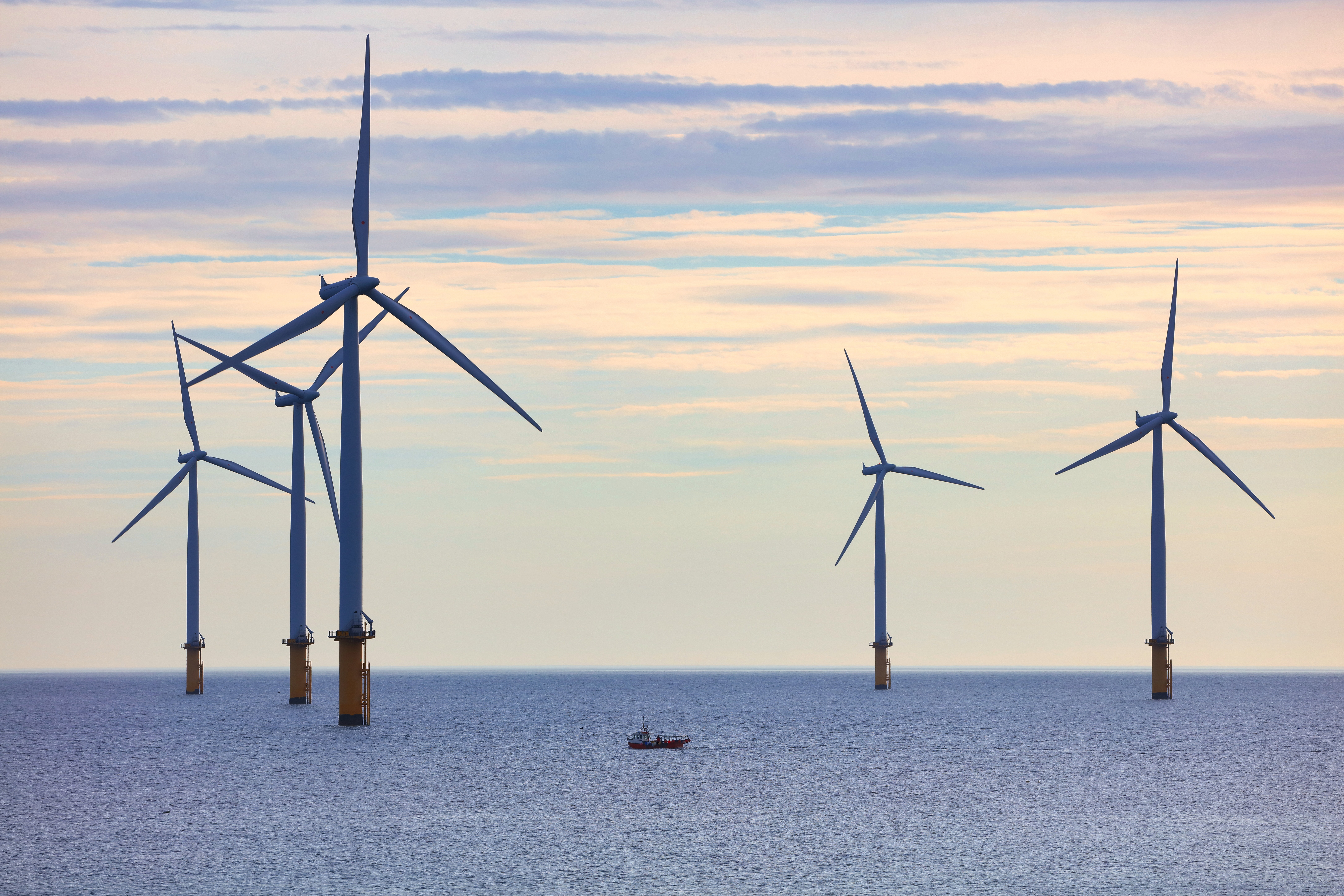
But the same system that produces those high prices also produces regular periods when there’s more renewable power than the grid can use. Renewables now generate more than half of the UK's electricity, a record 52.5% in 2025, and when the wind is strong, the system operator often has to pay generators to turn down: part of around £2.7 billion a year spent managing the network, a large share of it tied to wind that has to be curtailed.
This isn’t saying that every chemical process should run directly off wind, which is the version of the idea most likely to fail. It’s to use that surplus where it fits best: making hydrogen, oxygen, nitrogen, and then ammonia or methanol, through electrolysis buffered by storage, so that the flexible front end absorbs cheap power while the rest of the process runs steadily. Those intermediates can even serve as a way of storing surplus energy (think molecular batteries). That’s a credible power-to-chemicals story, and it points straight back to the top of the minimum critical volume list. Following the wind surplus and turning plants up and down from 20% to 90% load for most chemistries is neither credible nor manageable.
The real barrier isn’t chemistry or engineering
The barrier is not a lack of science or engineering. Many of the reactors and catalysts already exist. Even the harder routes are real and improving. What no longer exists is the thing that used to hold the system together: a single organisation with the reach and the incentive to connect the energy, the molecules and the end users into one investable proposition.
This is the ICI-shaped hole in the British economy. The companies that control the cheap electrons are paid to curtail, not to make molecules. The companies that make molecules have offshored their supply chains long ago. The companies at the end of the chain, the aerospace primes and consumer-goods manufacturers, have little appetite to rebuild what sits upstream of them. No single actor is incentivised to optimise the whole chain, so no one does. The hole is not a failure of engineering. It’s a failure of coordination.
Closing it is mostly an institutional task. It needs public procurement and offtake guarantees, so that genuinely essential materials have a guaranteed buyer and an investor can see a return. It needs regulation pointed in the right direction. The UK's carbon border adjustment, due in 2027, will begin to price the carbon footprint of imported aluminium, cement, fertiliser, hydrogen and steel, though it arrives a year after the EU's own scheme and covers less; getting its scope and timing right matters for any domestic producer competing against high-carbon imports.
Electricity-market reform could pay flexible plants to absorb surplus power rather than paying generators to waste it. It also needs the right kind of finance: public finance institutions such as the National Wealth Fund, capitalised with £27.8 billion from the Treasury, and the British Business Bank, which exist to draw private investment into strategic projects the market would not back on its own, alongside more familiar support for smaller and more innovative firms. The Grangemouth rescue, a blend of grant, loan guarantee and private investment, showed that the state will act when it judges an asset to be strategically important.
In May 2026, it went further, announcing a £350 million Critical Chemicals Resilience Fund aimed at producers that supply essential inputs to food, energy, water and healthcare. The open question is whether that support will be directed by design, across a considered shortlist of genuinely critical materials, rather than asset by asset under the threat of closure.
It’s worth being clear-eyed about what this is. A package of procurement, guarantees, border adjustment and public finance isn’t a free-market reshoring story. It’s industrial policy: a decision that the public should underwrite the first-loss risk of capabilities the market will not fund on its own, for a small number of materials where the country has judged the exposure unacceptable. It’s worth remembering that the chemical clusters held up as global success stories in Korea, China and Singapore's Jurong Island are largely the product of deliberate state planning, not free markets. That can be the right call. It’s not a small one, and the discipline of the shortlist is what keeps it honest.
For the industrial regions that still hold the assets, the ports, the skills and the access to low-carbon power, including Teesside, the Humber, Grangemouth, Runcorn, and South Wales, this is also the difference between resilience as an abstract policy worry and a practical pipeline of demonstrators and investable projects.
From argument to evidence
An argument like this cannot be settled by rhetoric. It has to be tested, material by material: which are truly critical, what volume would count as strategically meaningful, which routes are technically credible, whether the UK has the feedstocks and the energy to support them, and whether domestic production is more defensible than a strategic stock or a trusted supplier. This is the work organisations like CPI exist to do, through techno-economic and life-cycle analysis, process de-risking, and demonstrators that prove what’s possible before anyone commits serious capital. Our role isn’t to claim that everything can or should be made here. It’s to help government and industry tell the difference, and to bring together the chemical producers, energy companies, manufacturers, investors and public partners who will not assemble themselves.
What we choose to make
Now we return to the question we started with: What can Britain still make for itself? On the current course, steadily less. But the answer is not nostalgia for the industry we used to have, nor is it a fortress economy that tries to make everything. It’s a clear-headed decision about the few things that matter most, followed by the patient, unglamorous work of securing them: working out, material by material, which to make here and which to source another way, and proving that the cleaner, safer, modern processes can actually pay their way at the scales involved.
That’s a smaller ambition than rebuilding ICI. It’s also a more achievable one, and a more urgent one than the quiet of the last 30 years would suggest. The country doesn’t need to make everything. It needs to decide what it cannot afford not to make and then get on with it.