" height="17.646099999999997px" id="QslXmfAfI" transform="translate(49.168 11.85)" width="14.255000000000003px"/><path d="M 7.17 3.374 C 5.292 3.374 3.927 4.412 3.84 4.585 L 3.84 13.927 C 4.011 14.099 5.122 14.792 6.743 14.792 C 9.559 14.792 11.523 12.629 11.523 8.91 C 11.523 5.191 9.56 3.374 7.17 3.374 Z M 7.255 17.819 C 5.292 17.819 3.927 17.127 3.756 16.954 L 3.756 24.739 L 0 24.739 L 0 0.519 L 3.328 0.519 L 3.328 1.644 C 3.499 1.471 5.122 0 7.852 0 C 12.291 0 15.279 3.548 15.279 8.563 C 15.364 14.186 11.693 17.817 7.254 17.817" fill="rgb(255, 255, 255)" height="24.7392px" id="Jv0Bp2r5m" transform="translate(66.412 11.677)" width="15.280263915789673px"/><path d="M 0.341 7.265 L 4.097 7.265 L 4.097 24.046 L 0.341 24.046 Z M 2.219 4.411 C 1.024 4.411 0 3.46 0 2.248 C 0 1.036 1.024 0 2.219 0 C 3.414 0 4.353 1.037 4.353 2.248 C 4.353 3.459 3.415 4.411 2.219 4.411 Z" fill="rgb(255, 255, 255)" height="24.045689786529543px" id="rHOnirvNp" transform="translate(85.019 5.105)" width="4.352800000000002px"/><path d="M 7.683 11.463 C 7.598 11.29 7.511 11.203 7.426 11.03 C 7.341 10.943 7.341 10.857 7.255 10.684 C 5.548 7.743 3.67 5.235 2.048 3.592 C 1.623 3.158 1.195 3.158 0.769 3.158 C 0.512 2.898 0.257 2.639 0 2.379 C 0 0.908 0.683 0.13 1.11 0.043 C 1.623 -0.128 2.22 0.216 2.902 0.995 C 4.609 2.812 6.401 6.704 7.683 11.461" fill="rgb(255, 255, 255)" height="11.462948338486765px" id="tChElFj4n" transform="translate(14.254 0.474)" width="7.682599999999999px"/><path d="M 9.856 9.461 C 9.771 9.375 9.685 9.287 9.514 9.115 C 9.428 9.029 9.343 8.942 9.258 8.856 C 6.867 6.432 4.393 4.531 2.429 3.32 C 1.916 2.973 1.489 3.147 1.063 3.233 C 0.722 3.06 0.466 2.887 0.125 2.713 C -0.218 1.243 0.209 0.379 0.636 0.118 C 1.148 -0.14 1.832 0.033 2.599 0.552 C 4.648 1.936 7.379 5.223 9.855 9.461" fill="rgb(255, 255, 255)" height="9.460630695019557px" id="vloudrALc" transform="translate(9.775 2.303)" width="9.855710115060003px"/><path d="M 11.6 6.909 C 11.515 6.823 11.343 6.736 11.174 6.649 C 11.087 6.563 10.918 6.563 10.832 6.476 C 7.929 4.833 5.027 3.536 2.808 2.93 C 2.211 2.758 1.869 3.017 1.526 3.19 C 1.185 3.104 0.844 3.017 0.503 2.93 C -0.266 1.634 -0.01 0.681 0.331 0.335 C 0.759 -0.096 1.442 -0.096 2.38 0.25 C 4.6 1.027 8.101 3.449 11.6 6.909 Z" fill="rgb(255, 255, 255)" height="6.909181958759132px" id="Jjs0AiJtx" transform="translate(5.812 5.287)" width="11.59970127692726px"/><path d="M 12.602 4 C 12.431 3.915 12.345 3.915 12.174 3.915 C 12.089 3.915 11.92 3.827 11.833 3.827 C 8.59 2.961 5.516 2.53 3.212 2.53 C 2.529 2.53 2.274 2.875 2.017 3.134 L 0.993 3.134 C -0.117 2.009 -0.117 1.059 0.139 0.626 C 0.396 0.107 1.077 -0.065 2.103 0.021 C 4.323 0.107 8.334 1.579 12.602 4 Z" fill="rgb(255, 255, 255)" height="4.000438971629659px" id="sM4pEUyNl" transform="translate(2.762 9.234)" width="12.602083166916639px"/><path d="M 12.82 1.309 L 12.051 1.309 C 8.723 1.309 5.65 1.743 3.43 2.348 C 2.833 2.52 2.661 2.866 2.49 3.299 C 2.149 3.384 1.808 3.472 1.466 3.558 C 0.185 2.779 -0.071 1.914 0.015 1.395 C 0.185 0.876 0.782 0.445 1.722 0.271 C 3.855 -0.334 8.038 0.1 12.819 1.309" fill="rgb(255, 255, 255)" height="3.557663868293785px" id="WFA1ZSpfu" transform="translate(0.836 13.482)" width="12.820262677582846px"/><path d="M 12.377 0 C 12.206 0 12.12 0.086 11.951 0.086 C 11.864 0.086 11.695 0.173 11.609 0.173 C 8.365 1.124 5.549 2.249 3.5 3.373 C 2.988 3.719 2.903 4.15 2.817 4.498 C 2.475 4.67 2.22 4.844 1.963 5.017 C 0.512 4.584 0 3.806 0 3.287 C 0 2.767 0.512 2.249 1.366 1.73 C 3.244 0.779 7.512 0.086 12.378 0" fill="rgb(255, 255, 255)" height="5.017299999999999px" id="WIqTxAC_K" transform="translate(0 16.695)" width="12.3776px"/><path d="M 11.312 0 C 11.141 0.086 11.055 0.173 10.884 0.26 C 10.798 0.346 10.714 0.346 10.543 0.433 C 7.641 2.163 5.164 4.065 3.544 5.709 C 3.116 6.141 3.116 6.66 3.116 7.006 C 2.859 7.265 2.603 7.525 2.433 7.785 C 0.896 7.785 0.214 7.18 0.043 6.66 C -0.127 6.141 0.214 5.449 0.983 4.844 C 2.775 3.114 6.616 1.298 11.311 0" fill="rgb(255, 255, 255)" height="7.784800000000001px" id="MK0nqktck" transform="translate(0.297 18.944)" width="11.311724843428175px"/><path d="M 9.252 0 C 9.168 0.086 9.081 0.173 8.911 0.346 C 8.825 0.432 8.74 0.519 8.654 0.606 C 6.264 3.028 4.386 5.536 3.191 7.526 C 2.849 8.13 3.02 8.564 3.191 8.91 C 3.02 9.255 2.849 9.515 2.679 9.775 C 1.227 10.208 0.375 9.775 0.118 9.343 C -0.138 8.824 0.032 8.131 0.544 7.354 C 1.825 5.365 5.068 2.597 9.251 0.002" fill="rgb(255, 255, 255)" height="9.954311867869848px" id="JsfR8EvL2" transform="translate(2.186 21.192)" width="9.252355542257117px"/><path d="M 6.819 0 C 6.734 0.086 6.647 0.26 6.562 0.433 C 6.477 0.519 6.477 0.692 6.391 0.779 C 4.77 3.72 3.489 6.66 2.892 8.909 C 2.722 9.514 2.976 9.86 3.148 10.207 C 3.063 10.553 2.977 10.899 2.892 11.245 C 1.612 11.937 0.672 11.764 0.331 11.418 C -0.095 10.985 -0.095 10.294 0.246 9.342 C 1.013 7.006 3.404 3.546 6.819 0 Z" fill="rgb(255, 255, 255)" height="11.720625000000002px" id="m4pphcds0" transform="translate(5.045 23.527)" width="6.818575406303453px"/><path d="M 3.863 0 C 3.778 0.173 3.778 0.26 3.778 0.431 C 3.692 0.519 3.692 0.691 3.692 0.778 C 2.838 4.065 2.411 7.179 2.411 9.514 C 2.411 10.206 2.753 10.464 3.094 10.724 L 3.094 11.763 C 1.984 12.801 1.045 12.887 0.619 12.628 C 0.107 12.369 -0.064 11.677 0.021 10.639 C 0.021 8.39 1.473 4.325 3.863 0 Z" fill="rgb(255, 255, 255)" height="12.751489535946135px" id="cpEqjkGDz" transform="translate(9.025 25.603)" width="3.8629048371474006px"/><path d="M 3.473 11.589 C 2.704 12.888 1.85 13.234 1.339 13.06 C 0.828 12.888 0.401 12.281 0.231 11.33 C -0.282 8.995 0.06 4.756 1.254 0 L 1.254 0.777 C 1.254 4.151 1.682 7.266 2.279 9.515 C 2.449 10.12 2.876 10.292 3.217 10.551 C 3.217 10.899 3.303 11.245 3.474 11.59" fill="rgb(255, 255, 255)" height="13.10186100081782px" id="uppDfucj7" transform="translate(13.172 27.421)" width="3.474019629105161px"/><path d="M 5.122 10.64 C 4.694 12.11 3.927 12.629 3.414 12.629 C 2.902 12.629 2.304 12.11 1.878 11.245 C 0.768 9.169 0.085 4.931 0 0 C 0 0.172 0.085 0.259 0.085 0.432 C 0.085 0.519 0.171 0.692 0.171 0.778 C 1.109 4.065 2.22 6.919 3.329 8.995 C 3.67 9.514 4.096 9.6 4.439 9.687 C 4.78 10.033 4.951 10.379 5.122 10.638" fill="rgb(255, 255, 255)" height="12.628800000000002px" id="vo5UG0vdZ" transform="translate(16.303 28.716)" width="5.121799999999997px"/><path d="M 7.596 8.995 C 7.596 10.551 6.914 11.244 6.487 11.329 C 5.975 11.503 5.377 11.158 4.695 10.379 C 3.072 8.649 1.28 4.755 0 0 C 0.085 0.172 0.171 0.259 0.256 0.431 C 0.341 0.517 0.341 0.692 0.427 0.777 C 2.134 3.719 4.012 6.227 5.633 7.87 C 6.061 8.304 6.487 8.304 6.915 8.304 C 7.084 8.476 7.341 8.735 7.597 8.995" fill="rgb(255, 255, 255)" height="11.373210313461023px" id="CwMQ25e3M" transform="translate(18.523 29.41)" width="7.597100000000001px"/><path d="M 9.133 9.255 C 8.621 9.515 7.938 9.34 7.17 8.821 C 5.207 7.61 2.475 4.237 0 0 C 0.085 0.086 0.169 0.172 0.341 0.346 C 0.426 0.432 0.512 0.519 0.598 0.605 C 2.988 3.026 5.463 4.93 7.427 6.14 C 7.939 6.486 8.365 6.314 8.793 6.226 C 9.134 6.4 9.39 6.573 9.731 6.745 C 9.988 8.13 9.561 8.994 9.134 9.254" fill="rgb(255, 255, 255)" height="9.373902685657523px" id="LT4eU69fV" transform="translate(20.828 29.583)" width="9.808773264265323px"/><path d="M 11.268 6.488 C 10.84 6.922 10.159 6.922 9.22 6.574 C 7 5.883 3.501 3.374 0 0 C 0.085 0.088 0.257 0.173 0.428 0.26 C 0.512 0.348 0.683 0.348 0.769 0.433 C 3.671 2.078 6.573 3.374 8.792 3.979 C 9.389 4.152 9.732 3.892 10.073 3.719 C 10.415 3.807 10.756 3.892 11.097 3.979 C 11.782 5.19 11.609 6.142 11.268 6.487" fill="rgb(255, 255, 255)" height="6.824935237585997px" id="shxgCPSUC" transform="translate(23.047 29.149)" width="11.567287574027546px"/><path d="M 12.548 3.374 C 12.291 3.893 11.609 4.066 10.585 3.979 C 8.281 3.893 4.268 2.422 0 0 C 0.17 0.087 0.257 0.087 0.426 0.087 C 0.511 0.173 0.682 0.173 0.767 0.173 C 4.011 1.038 7.085 1.47 9.389 1.47 C 9.986 1.47 10.327 1.124 10.584 0.865 L 11.609 0.865 C 12.718 2.076 12.803 2.941 12.547 3.374" fill="rgb(255, 255, 255)" height="4.000464435441412px" id="uu7Nczyji" transform="translate(25.096 28.025)" width="12.667149073078093px"/><path d="M 12.975 2.249 C 12.804 2.768 12.206 3.2 11.268 3.373 C 8.964 3.892 4.78 3.546 0 2.335 L 0.768 2.335 C 4.098 2.335 7.169 1.903 9.389 1.297 C 9.986 1.124 10.158 0.778 10.414 0.345 C 10.755 0.259 11.096 0.173 11.438 0 C 12.803 0.951 13.146 1.816 12.975 2.249" fill="rgb(255, 255, 255)" height="3.606840004247573px" id="CyUPdgCMb" transform="translate(26.803 24.219)" width="13.015267805496734px"/><path d="M 12.463 1.729 C 12.463 2.334 11.951 2.853 11.097 3.286 C 9.049 4.411 4.866 5.189 0 5.189 C 0.171 5.189 0.256 5.103 0.426 5.103 C 0.512 5.103 0.683 5.015 0.768 5.015 C 4.011 4.065 6.828 2.94 8.877 1.816 C 9.56 1.384 9.474 0.865 9.646 0.346 C 9.817 0.259 9.987 0.173 10.158 0 C 11.865 0.346 12.462 1.211 12.462 1.73" fill="rgb(255, 255, 255)" height="5.188899999999997px" id="HfjkjT_ZU" transform="translate(28.168 19.463)" width="12.463100000000004px"/><path d="M 10.244 3.036 C 8.536 4.68 4.694 6.496 0 7.793 C 0.17 7.705 0.257 7.62 0.426 7.533 C 0.512 7.445 0.597 7.36 0.768 7.36 C 3.67 5.63 6.146 3.726 7.766 2.084 C 8.279 1.565 8.107 0.96 8.194 0.527 C 8.363 0.355 8.535 0.181 8.62 0.007 C 10.327 -0.079 11.096 0.614 11.181 1.131 C 11.352 1.736 11.011 2.344 10.242 3.035" fill="rgb(255, 255, 255)" height="7.793082706379288px" id="SXOvdlaRs" transform="translate(28.852 14.61)" width="11.224057094005001px"/><path d="M 8.707 2.721 C 7.512 4.71 4.183 7.478 0 9.986 C 0.087 9.899 0.171 9.814 0.341 9.64 C 0.428 9.554 0.512 9.468 0.598 9.38 C 2.989 6.959 4.866 4.451 6.062 2.461 C 6.403 1.941 6.231 1.51 6.146 1.076 C 6.318 0.731 6.488 0.472 6.659 0.126 C 8.109 -0.22 8.963 0.211 9.22 0.645 C 9.389 1.164 9.22 1.856 8.707 2.721 Z" fill="rgb(255, 255, 255)" height="9.986170943855772px" id="I3iesR8ly" transform="translate(29.021 10.081)" width="9.283076753082124px"/><path d="M 6.488 2.411 C 5.805 4.66 3.33 8.206 0 11.754 C 0.085 11.666 0.171 11.493 0.257 11.32 C 0.341 11.234 0.341 11.061 0.428 10.974 C 2.049 8.034 3.33 5.092 3.927 2.843 C 4.098 2.238 3.842 1.892 3.67 1.546 C 3.756 1.201 3.841 0.855 3.927 0.508 C 5.293 -0.269 6.146 -0.01 6.488 0.336 C 6.829 0.767 6.829 1.461 6.488 2.411 Z" fill="rgb(255, 255, 255)" height="11.753584393394782px" id="pbQLCdVwI" transform="translate(28.596 6.066)" width="6.743699999999997px"/><path d="M 3.927 2.027 C 3.842 4.362 2.391 8.427 0 12.752 C 0.085 12.58 0.085 12.494 0.085 12.321 C 0.171 12.235 0.171 12.061 0.171 11.975 C 1.025 8.687 1.451 5.573 1.451 3.238 C 1.451 2.633 1.109 2.287 0.854 2.027 L 0.854 0.988 C 1.964 -0.049 2.902 -0.136 3.33 0.124 C 3.756 0.297 4.012 0.988 3.927 2.027 Z" fill="rgb(255, 255, 255)" height="12.752261951058593px" id="oBvQcz5UO" transform="translate(27.57 2.991)" width="3.9432808199121254px"/><path d="M 2.134 12.645 L 2.134 12.299 C 2.134 8.925 1.706 5.811 1.196 3.561 C 1.025 2.957 0.599 2.784 0.256 2.524 C 0.171 2.179 0.086 1.831 0 1.486 C 0.769 0.188 1.622 -0.071 2.134 0.015 C 2.646 0.188 3.072 0.794 3.243 1.745 C 3.756 4.081 3.415 8.319 2.219 13.077 L 2.219 12.644 L 2.134 12.644 Z" fill="rgb(255, 255, 255)" height="13.077048589670875px" id="C7U1kXqYA" transform="translate(23.9 0.849)" width="3.4740394102442735px"/><path d="M 5.036 12.629 C 5.036 12.455 4.952 12.369 4.952 12.195 C 4.952 12.109 4.865 11.937 4.865 11.85 C 3.927 8.563 2.817 5.709 1.707 3.633 C 1.366 3.028 0.94 3.028 0.512 2.854 C 0.341 2.508 0.171 2.249 0 1.989 C 0.428 0.519 1.195 0 1.707 0 C 2.22 0 2.732 0.519 3.244 1.384 C 4.268 3.46 4.952 7.698 5.036 12.629 Z" fill="rgb(255, 255, 255)" height="12.6287px" id="cy9raRJnv" transform="translate(19.119 0)" width="5.036200000000001px"/></svg>)
Regenerative Autonomous Fleets: Making materials matter in the future of mobility
Could autonomous fleets transform more than mobility? Explore how circular manufacturing could create regenerative transport systems.

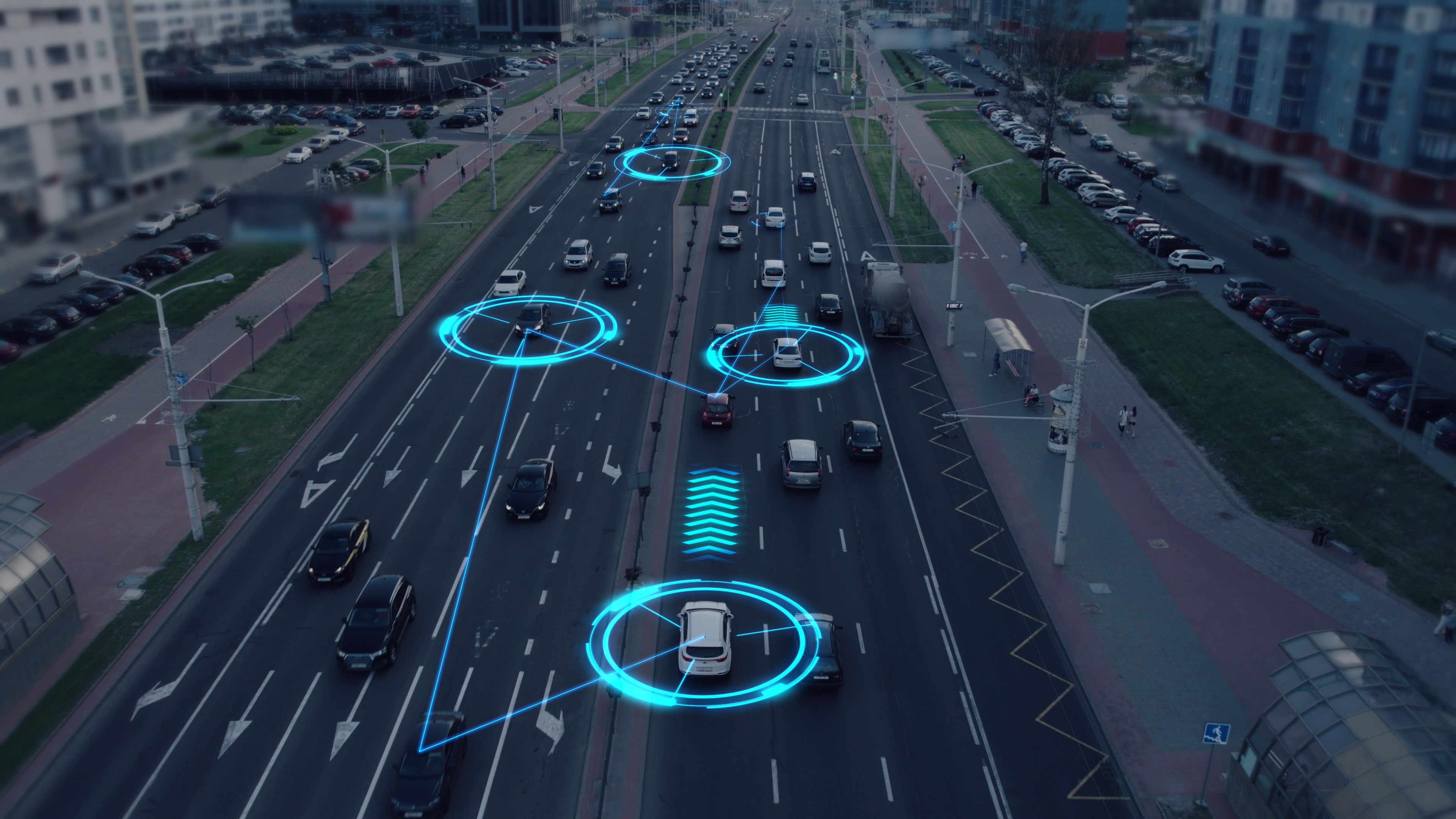
Autonomous vehicles are reaching a tipping point. Globally, billions are being invested across software, sensors, AI and supporting infrastructure. In early 2026, UK-based embodied AI company Wayve was reported to be valued at around $8.6 billion, while cities from San Francisco to Shenzhen continue to expand autonomous vehicle pilots. Closer to home, Uber and Wayve plan to launch a robotaxi service in London, signalling how quickly the technology is moving from experimentation towards commercial deployment.
The underlying economics are becoming increasingly difficult to ignore. Autonomous ride-hailing services are beginning to demonstrate competitive cost-per-mile in controlled environments, while fleet utilisation rates could be several times higher than privately owned vehicles, which spend most of their lives parked. At the same time, electric vehicle platforms are generating unprecedented volumes of operational data, creating new opportunities to understand, optimise and improve performance across entire fleets.
Even with regulatory, technical and behavioural hurdles still to overcome, the direction of travel feels increasingly clear: we’re moving from cars we own to fleets we use.
Over the past decade, the case for autonomous mobility has largely been framed through the lens of transport efficiency. Fewer accidents, less congestion, lower emissions and more productive use of time are all compelling outcomes and increasingly within reach. That shift alone would be significant. However, there's another opportunity hiding in plain sight that could prove even more transformative.
What if autonomous mobility was designed not only to optimise movement, but also to optimise materials? Not just how vehicles operate, but how they’re made, maintained, upgraded, recovered and ultimately reborn. What if future mobility systems were designed to regenerate value rather than slowly consume it? In other words, shifting from an unsustainable linear system into one that supports material circularity.
This is where the idea of Regenerative Autonomous Fleets, or RAFs, begins. RAFs pose a simple question: what happens when autonomous mobility and circular supply chains are designed as a single system? Not as science fiction or a distant “next phase”, but as the logical convergence of technologies, business models and policy shifts that are already emerging today.
At CPI, our mission is to catalyse advanced technologies and manufacturing solutions that benefit people, places, and our planet. Working across sustainable materials, battery technologies, digital systems, recycling, recovery and advanced manufacturing gives CPI a unique perspective on where the next generation of innovation-led growth could emerge. The market may ultimately decide how autonomous vehicles evolve, but the bigger question is whether we choose to build systems that simply use resources more efficiently, or systems that actively regenerate them.

What are regenerative autonomous fleets?
Regenerative autonomous fleets are networked mobility systems designed to maximise the value of materials and components across multiple lifecycles through continuous monitoring, predictive intervention and circular manufacturing pathways. They bring together three powerful trends: fleet economics, autonomy and regeneration.
Fleet economics shifts optimisation away from individual ownership and towards system-level performance. Autonomy enables vehicles to monitor, route and manage themselves using vast quantities of real-time data. Regeneration extends the focus beyond maintenance and repair, creating systems in which materials and components are continuously restored, upgraded, reused, remanufactured and recirculated.
This is fundamentally different from today's automotive model. Most vehicles are designed around a predictable pattern of decline. They depreciate, components wear out and materials gradually lose value before entering fragmented recovery systems at end of life. RAFs invert that logic. Rather than accepting degradation as inevitable, they seek to preserve and regenerate value over time. End of life becomes less important than lifecycle management, with assets moving through a series of planned interventions designed to maximise both economic and material value.
Why autonomous fleets change the economics of circularity
One of the biggest barriers to circularity today isn't technology, but economics. Vehicle ownership is fragmented across millions of individuals, maintenance is often reactive and material recovery happens inconsistently. Valuable components frequently leave the system long before their useful life has been exhausted, while many of the environmental and economic costs associated with disposal are externalised elsewhere in the value chain.
Autonomous fleets have the potential to change these economics. When a single operator manages thousands, or potentially hundreds of thousands, of vehicles, every component failure becomes a cost, every maintenance decision affects profitability and every gram of lost material matters. What appears marginal at the level of an individual vehicle becomes highly significant when multiplied across an entire fleet.
This creates an important shift in perspective. Downtime is no longer simply an inconvenience, it's lost revenue. Material waste is no longer somebody else's problem, it becomes an operational cost. Circularity moves from being a sustainability aspiration to becoming core business logic. The nature of procurement may also change. Instead of buying vehicles outright, cities could procure mobility as a service through long-term contracts. An operator delivering transport services to a city for 20 years has very different incentives from a manufacturer selling a vehicle once and moving on. Durability, maintenance and material recovery become commercial priorities, not just sustainability goals. The opportunity isn't merely to reduce environmental impact, but to create new forms of competitive advantage through better stewardship of materials and assets.
There's another important factor at play. Unlike conventional vehicles, future autonomous fleets may have limited second-hand markets. Vehicles packed with proprietary sensors, software and integrated technologies are more likely to remain within managed fleet ecosystems. That creates a stronger commercial incentive to preserve, recover and regenerate value internally rather than relying on traditional disposal routes.
From reactive maintenance to material orchestration
Modern vehicles already generate vast quantities of data. Sensors monitor battery health, tyre pressure, vibration, temperature, energy consumption and environmental conditions. While a good amount of data is used proactively to enable real-time functionality, there's a lot of information that’s still used reactively; identifying faults after they have emerged rather than predicting and preventing them.
The foundations of a more proactive approach already exist. In Formula One, teams use live data and predictive models to optimise tyre performance and degradation. In aviation, Rolls-Royce analyses performance data across thousands of engines to improve maintenance planning, reduce wear and increase operational efficiency. These examples demonstrate how data can be used not simply to monitor assets, but to orchestrate their performance throughout their lifecycle.
RAFs extend this thinking across entire mobility systems. All components could be continuously monitored throughout their operational life, with interventions scheduled at precisely the right moment. Vehicles could be routed in ways that minimise material stress, while maintenance decisions could be informed by data gathered across thousands of comparable assets. Even customer experience becomes part of the equation. Sensors may detect mechanical degradation, but passengers may still be the best indicator of declining ride quality, unpleasant smells or other issues that affect comfort and perception.
At fleet scale, this becomes something much larger than maintenance. It becomes material orchestration: ensuring the right material is in the right place at the right time. AI will play a critical role in balancing material efficiency against competing priorities such as safety, ride experience, energy management and operating cost. These are precisely the kinds of complex optimisation challenges that AI is increasingly well suited to address.
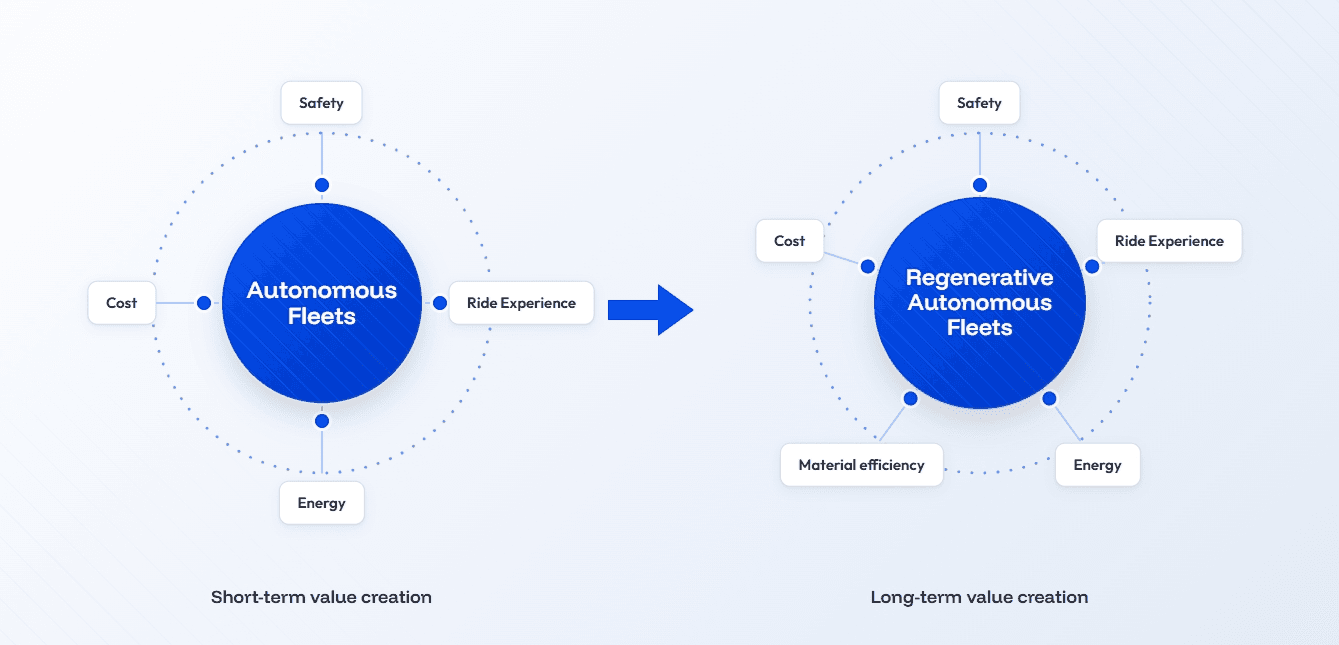
Beyond recycling: Designing for regeneration
There’s an important distinction to make here. RAFs are not simply about creating smarter maintenance systems or more efficient recycling processes. They’re about maximising material value across multiple lifecycles and designing systems that continuously regenerate that value.
Recycling remains important, but it sits at the bottom of a much broader hierarchy. A regenerative system seeks first to retain value through reuse, refurbishment, reconditioning and remanufacturing before considering material recovery. Different vehicle systems operate on different timescales, from tyres and consumables to batteries, interiors, electronics and structural components. The challenge is managing all of these lifecycles simultaneously within an integrated system.
Over time, the vehicle becomes less of a static product and more of a dynamic assembly of material flows. The traditional boundary between use and recovery begins to dissolve. There’s no clear endpoint, only a series of managed transitions designed to maximise value at every stage.
Given sufficient time and autonomy, AI may also influence how future vehicles are designed. Design rules could evolve to accommodate changing user behaviours, operational requirements and circularity objectives in ways that would be difficult to optimise manually. The same principles could eventually extend beyond vehicles to the wider infrastructures that support them.
This may sound ambitious, but the opportunity becomes easier to imagine when considering new developments built with fewer legacy constraints. In established cities such as London or New York, change is likely to be gradual, shaped by existing infrastructure and systems. New developments offer a different perspective. Whether it's a purpose-built city in the desert, a major regeneration project or even future operations on the Moon, starting with a blank canvas creates a powerful incentive to conserve, recover and maximise the value of every material from the outset.
The geography of regeneration
Technology alone won't create regenerative autonomous fleets. Geography matters too.
High-performing circular systems depend on proximity. Components can’t move efficiently through refurbishment, remanufacturing and recovery pathways if supply chains are fragmented, infrastructure is disconnected, or demand is too dispersed. Circularity at this level becomes difficult to offshore because responsiveness, coordination and material visibility become increasingly important.
This points towards a future where autonomous fleets help anchor localised manufacturing ecosystems. We describe these as regenerative manufacturing zones, or RMZs. Located within practical reach of fleet operations, RMZs could combine refurbishment facilities, remanufacturing centres, advanced recycling infrastructure and materials production capabilities within connected regional ecosystems.
Digital technologies would enable assets and materials to be tracked throughout their lifecycle, while predictive analytics could help anticipate future demand, availability and recovery opportunities, creating a closer link between supply and demand across the system. Automation and robotics could support increasingly flexible regeneration processes, allowing materials and components to move through interconnected networks rather than rigid production lines. Alongside these manufacturing capabilities, knowledge-intensive activities focused on AI-driven design, digital product passports, lifecycle analysis, supply chain modelling and quality assurance could flourish, helping to create dynamic regenerative webs that continuously preserve and recover value.
The benefits would extend beyond mobility. Many of the same capabilities could support adjacent sectors, including energy storage, consumer electronics, textiles and construction. Over time, RMZs could become centres of innovation and industrial growth, creating high-value jobs while strengthening regional resilience and supply chain security.
A North Star for future mobility
Many of the trends needed to support RAFs are already emerging. Governments are placing greater emphasis on critical materials security, supply chain resilience and industrial competitiveness. Circular business models and extended producer responsibility (EPR) are gaining traction. Digital product passports are moving closer to implementation. Public procurement is increasingly considering whole-life value alongside upfront cost.
Individually, these developments are important. Collectively, they point towards a future that is more circular, more transparent and more resilient. Yet one of the challenges facing innovation is that stakeholders are often moving in broadly the same direction without a shared destination.
This is where RAFs become useful. They provide a North Star. A tangible vision capable of aligning technology development, industrial strategy, investment decisions and public policy around a common outcome. They help us imagine a future where materials are continuously tracked, recovered and redeployed; where critical resources remain within managed loops rather than leaking from the system; where supply chains are shorter, more transparent and more controllable; and where economic value is anchored closer to the communities that depend on it.
Final thoughts
Autonomous mobility is moving from hype to deployment. The question isn’t whether autonomous vehicles can move people and goods more efficiently, it’s whether we choose to use these technologies to regenerate the materials, industries and places they depend upon.
Regenerative autonomous fleets offer a different road. The technologies required to begin building them already exist. The challenge now is connecting them in ways that align incentives, behaviour and outcomes.
At CPI, much of our work focuses on bringing together diverse organisations, technologies and markets to unlock innovation-led growth. The same approach will be needed if concepts such as RAFs are to move from thought experiment to reality. Success will depend on collaboration between industry, cities and regions, governments, investors, researchers and citizens. No single stakeholder can build a regenerative mobility system alone.
The crossroads are on the horizon. The decisions made today about mobility, manufacturing, materials and digital infrastructure will shape not only how we move in the future, but also how we create, preserve and regenerate value. This opportunity extends beyond building smarter vehicles to creating smarter, more connected systems.
Let's innovate together.
Interested in exploring the future of circular manufacturing, sustainable mobility and advanced materials? Get in touch, by filling the form below, to discuss how we can help accelerate innovation from concept to commercial impact.
This is just the beginning
In part two of this three-part series, we will explore the innovations that could enable RAFs. In part three, we will finally consider how to align stakeholders around a regenerative future.